Release page
Format: Vinyl / Digital
Release Date: June 12, 2026
About
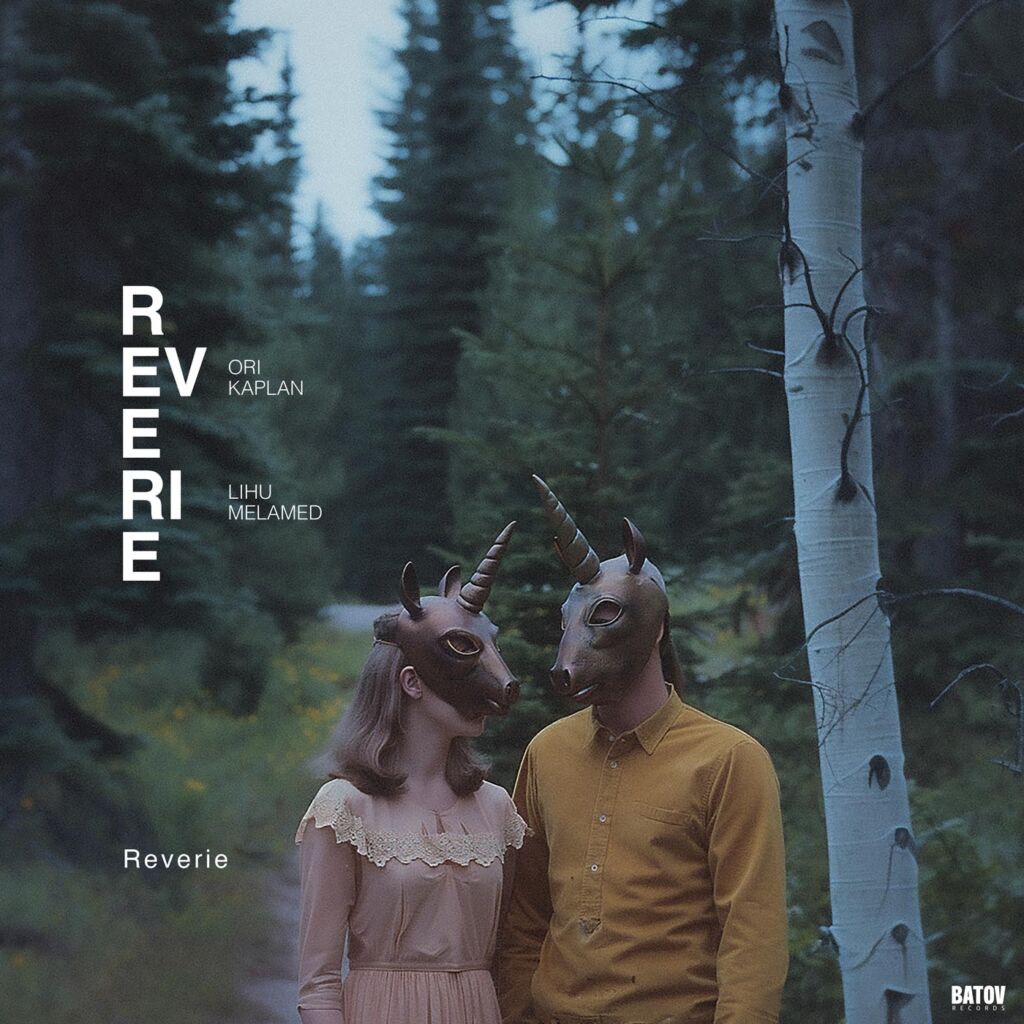
Reverie
by Ori Kaplan & Lihu Melamed
Reverie is the first full-length collaboration between Ori Kaplan and Lihu Melamed – a cinematic, soul-soaked LP that drifts between modal jazz, cinematic scores and psychedelic rock, released on Batov Records.
Saxophonist and producer Ori Kaplan is best known as a founding member of Balkan Beat Box, for his work with Gogol Bordello and more recently, Shotnez, while Melamed brings a deep studio craft honed over years as an engineer, producer and multi-instrumentalist. Together, they create a record that feels both ancient and immediate: music that evokes old biblical films, sun-bleached Western soundtracks and 70s jazz explorations, while remaining playful, spontaneous and deeply human.
There’s a strong cinematic undercurrent throughout Reverie. Think Charles Heston wandering through an Old Testament epic; Ennio Morricone soundtracking a desert horizon; Nino Rota scoring Fellini’s Rome; or Pasolini filming in Ethiopia. Minor-key strings, modal structures and unhurried grooves sit alongside echoes of Mingus and Yusef Lateef, with Ori’s baritone sax and flutes guiding the listener through shifting scenes and moods.
Melamed’s influence pulls in another direction: the spirit of 70s rock and psychedelia – The Doors, Woodstock, King Crimson – with organs, guitars and a sense of scale that balances Kaplan’s love of folk traditions, heavy percussion, Klezmer modes and Middle Eastern textures. The result is a careful blend of composition and instinct, where structure is often nudged aside in favour of feel.
The pair first met during recording sessions for Balkan Beat Box, with Melamed engineering the band’s sixth album. Kaplan quickly realised that Melamed was more than a technician: a musician fluent in piano, guitar, bass and vocals, with an intuitive sense of arrangement. Despite a fifteen-year age gap, the two shared a musical language, built on curiosity and trust. Reverie captures that connection – a record shaped by craft, but alive with risk and spontaneity.
Across the album’s key tracks, those ideas come into focus. Lead single “Merveille” moves in a gently breathing 5/4, laid out so naturally it barely feels asymmetrical. Opening with a romantic mandolin motif – like a suitor serenading at dusk – the track drifts into flutes that feel almost baroque, or like a naïve 70s French film score. Kaplan’s baritone sax hovers rather than leads, human timing intact, never rushed.
“The Stroll” introduces a deeper rhythmic pulse, opening with Kaplan’s flute setting the tone – patient, searching and almost ceremonial. As the track unfolds, powerful strings and brass move in and out of the arrangement, adding weight and drama without ever overwhelming the space. When it became clear the piece was still missing something elemental, Kaplan called longtime Balkan Beat Box and Shotnez collaborator Tamir Muskat, who approached the session almost like a conductor. Recording a single, full-take drum performance in his studio, everything locked instantly into place, resulting in something hypnotic, grounded and quietly powerful.
“Nuna” opens with a slightly wonky guitar and keys introduction, setting an off-kilter tone before a bold brass-led melody takes over. Kaplan weaves through the arrangement on sax and flute, grounding the track before it opens out into a trombone feature that pushes it closer to his Shotnez work. There’s a modal, big-band feel to the piece, with echoes of Mulatu Astatke, while a New Orleans-tinged drum groove gives it forward motion. Toward the end, the trombone and sax enter into a loose, conversational duel, locking the track into its own distinctive groove.
“Shangri-La” is the album’s sunshine moment: Latin-tinged, Santana-esque, playful and warm. Kaplan’s children and partner Pepí provide a breezy, wordless chorus, giving the track a family feel that mirrors its spirit – joyful, unpretentious, and made for the pleasure of making it. Think Last Tango in Paris colliding gently with Oye Como Va.
On “Amber”, Melamed pushes the sound into more electronic territory, blending programmed drums with big-band nostalgia. Originating from sessions with Itamar Ziegler – Kaplan’s Brooklyn neighbour and longtime Balkan Beat Box bassist – the track carries Ziegler’s unmistakable low-end signature, bridging vintage warmth and modern production.
Throughout Reverie, flutes play a central role – sometimes delicate, sometimes ritualistic – acting as a thread that binds the album’s many references into a single journey. It’s a record that rewards immersion: music that unfolds like a film, or a half-remembered dream.
Reverie is not about nostalgia, but about continuity – the passing of musical language from one generation to another, reshaped by experience, curiosity and trust. A debut LP that sounds lived-in, expansive and quietly confident.